

Machiavellianism is a concept derived from the ideas of a thinker named Niccolò Machiavelli. It’s a complex and controversial idea that has made its way into psychology. In this discussion, we’ll examine Machiavellianism closely to understand what it means, including how it relates to other psychological and emotional issues. Then, we’ll discuss how it manifests in people and why it’s essential today. We’ll also discuss how it fits into the bigger picture of the Dark Triad.
Key
Takeaway
Machiavellianism is a personality trait characterised by strategic manipulation, emotional detachment, and a willingness to deceive others to achieve personal goals. Named after the Renaissance political philosopher Niccolò Machiavelli, it is one of three traits in the Dark Triad alongside narcissism and psychopathy. It is a subclinical trait found in the general population, not a diagnosable disorder.
- • —Key traits include strategic thinking, manipulative behaviour, lack of empathy, calculative decision-making, and high adaptability.
- • —Machiavellianism is measured using the Mach-IV scale — a score of 60 or above indicates high Machiavellian tendencies.
- • —Unlike psychopathy (impulsive and emotionally flat) or narcissism (ego-driven), Machiavellianism is deliberate and patient — manipulation is a calculated means to an end.
- • —Research links high Machiavellianism with damaged relationships, anxiety, depression, and reduced life satisfaction despite material success.
- • —Cognitive Behavioural Therapy (CBT) can help individuals develop empathy, reduce manipulative patterns, and build more authentic relationships.xx
What is Machiavellianism?
Machiavellianism is a personality trait characterised by being cunning, manipulative, and strategic in dealing with others. The term comes from Machiavelli’s book “The Prince,” where he argued that it’s okay to do whatever it takes to gain power and influence. People with Machiavellian personalities understand social situations and can manipulate them to get what they want, even if it’s not ethical or doesn’t consider how it affects others.
The Dark Triad: Machiavellianism vs Narcissism vs Psychopathy
Machiavellianism is one of three personality traits that make up the “Dark Triad”, first identified by psychologists Paulhus and Williams in 2002. All three are subclinical – they exist in the general population, not just clinical settings – and share a core of disagreeableness.
| Trait | Core Characteristics | Key Difference |
| Machiavellianism | Strategic, manipulative, calculated, long-term planning, low empathy | Deliberate and patient; manipulation is a means to an end |
| Narcissism | Grandiosity, entitlement, self-admiration, need for external validation | Driven by ego and status; manipulation stems from self-importance |
| Psychopathy | Impulsive, callous, antisocial behaviour, remorselessness, thrill-seeking | Emotional flatness and impulsivity; least planning of the three |
Research published on PubMed Central (2025) found that while all three traits share a common neural basis, each has distinct patterns in emotional processing. Machiavellianism was uniquely associated with cold cognition and delayed reward processing.

Unpacking Machiavellianism: Traits and Characteristics
Understanding Machiavellianism involves looking at the defining traits of this personality type. Here are some key characteristics that can help you recognise someone with Machiavellian tendencies:
Strategic Thinking:
People with Machiavellian traits are very good at making long-term plans and manipulating situations and people to get what they want. This kind of strategic thinking involves careful planning and adapting to different situations. Machiavellians often focus on long-term strategies, anticipating future challenges and opportunities and positioning themselves advantageously. They do well in environments where complex problem-solving and strategic planning are important, such as politics, business, and high-stakes negotiations.
Manipulative Behavior:
People who exhibit Machiavellianism are skilled at influencing others using tactics like charm, deception, and calculated moves. They are also adept at identifying the weaknesses of those around them and using that knowledge to get what they want. Their manipulative behaviour is not just about taking advantage of situations—it’s actually planned out to help them stay in control in social and professional situations. This can be harmful to others because Machiavellians are willing to lie and use force to reach their goals.
Lack of Empathy:
One key characteristic of Machiavellianism is a profound lack of empathy. People with this trait tend to focus on their needs and desires above everything else, often ignoring how their actions might impact others. This lack of empathy allows them to make decisions and take actions that others might see as morally questionable or unethical. It lets them stay emotionally detached, making them strong opponents in competitive environments where tough decisions must be made without considering emotions.
Calculative Decision-Making:
Machiavellians are known for their careful decision-making. They think through their actions, considering what they stand to gain and what risks they might face. They don’t act on impulse but instead, take their time to ensure their actions help them reach their long-term goals. This can make them seem distant and methodical because they focus on efficiency rather than getting caught up in emotions or ethical questions.
Adaptability:
Adaptability is another key trait of Machiavellianism. People with these traits are good at changing their tactics to stay ahead when things around them change. This flexibility helps them handle complicated and ever-changing situations. They’re quick to rethink things, give up on strategies that aren’t working, and try new approaches that can help them do better. This adaptability makes them strong and often successful when sticking to a strict plan, and being unwilling to change could lead to failure.
Signs of Machiavellianism in Someone You Know
Recognising Machiavellian behaviour in others is not always straightforward because high-Mach individuals are skilled at disguising their motives. However, there are consistent patterns to watch for. They tend to flatter people in positions of power while dismissing or undermining those they see as less useful. Conversations often feel one-sided — they gather information about you but share very little about themselves. You may notice that agreements change when it suits them, or that they rewrite the history of conversations to shift blame. Over time, you might feel increasingly confused about your own judgement, which can be a sign of gaslighting. They often create conflict between others to maintain control, and they view relationships as transactions rather than genuine connections. If you consistently feel drained, manipulated, or unsure of yourself around someone, that pattern is worth paying attention to.
The Mach-IV Test: How Is Machiavellianism Measured?
Psychologists measure Machiavellianism using the Mach-IV scale, a 20-question assessment developed by Richard Christie and Florence Geis. The test produces a score from 20 to 100:
- High Machs (60 or above): More likely to be manipulative, strategic, and emotionally detached. Research consistently shows men score higher than women on average.
- Low Machs (below 60): More empathetic, honest, and relationship-oriented. Tend to view others with trust and goodwill.
The Mach-IV measures three dimensions: cynical views of human nature, willingness to use manipulative tactics, and an amoral approach to morality. While not a clinical diagnostic tool, it remains the gold standard for subclinical Machiavellianism research in psychology.
A 2024 study published in The Journal of Psychology confirmed that Machiavellianism was more strongly negatively correlated with affective empathy than any other Dark Triad trait.
Examples from History and Everyday Life
Influential people have been known for being cunning and strategic in politics, business, and relationships throughout history. We can see examples of this in the clever moves of political leaders and the competitive strategies used in the business world. Here, we explore notable instances of Machiavellianism in various contexts.
Political Examples
Throughout history, the political landscape has provided fertile ground for the employment of Machiavellian strategies. Leaders are frequently regarded as prime examples of manipulating and deceiving others to accomplish their political objectives.
Niccolò Machiavelli
It’s fitting, to begin with the namesake himself. Machiavelli, an influential figure in Renaissance Italy, was a diplomat, philosopher, and writer. His famous work, “The Prince,” discusses how to gain and maintain political power. Machiavelli’s political actions in Florence often matched the strategies he wrote about, involving changing alliances and clever deception.
Richard Nixon
The 37th President of the United States, Nixon, faced a lot of trouble during his time in office because of the Watergate scandal. This scandal showed how Nixon used sneaky and dishonest tactics to stay in power. He was involved in trying to cover up a break-in at the Democratic National Committee headquarters, and he used sneaky methods like wiretapping and spreading lies to make his opponents look bad. This all showed that Nixon believed it was okay to do bad things as long as he stayed in charge.
Vladimir Putin
The current President of Russia, Putin, is known for using strategic tactics to consolidate power. He controls information, manages wealthy individuals, and manipulates events at home and abroad to maintain his hold on power. From taking over Crimea to allegedly interfering in other countries’ elections, Putin’s methods often involve secrecy and strategic trickery.
Otto von Bismarck
The Iron Chancellor of Germany, Bismarck, was a master of realpolitik – a practical approach to politics based on practical and material factors rather than moral or ethical considerations. He used a series of wars and strategic alliances to unify Germany and skillfully manipulated European rivalries to isolate France.
Corporate Machiavellianism
In the business world, successful leaders are often praised for their ability to think ahead and making visionary plans. But sometimes, they are criticised for using aggressive methods and not always following the rules.
Steve Jobs
Steve Jobs, the co-founder of Apple Inc., was famous for his creative ideas and intense commitment to making great products. However, his way of leading was sometimes harsh and uncompromising, similar to the ideas of a historical figure called Machiavelli. Jobs was known for using fear and competition to push his employees to work hard. He also habitually took credit for other people’s ideas and was very tough in business deals. While he greatly impacted technology, some questioned whether his leadership style was always fair and ethical.
Elizabeth Holmes
The founder of Theranos, Holmes, showed extreme corporate deceit by tricking investors, employees, and the media to build and maintain her fraudulent company. She prioritised personal and financial gain over ethics, using strategic lies and betraying trust, revealing corporate behaviour’s darker side.
Carlos Ghosn
Ghosn, the former CEO of Nissan and Renault, is a prominent example of Machiavellianism in the international corporate arena. He orchestrated Nissan’s turnaround with aggressive cost-cutting measures and strategic alliances, including the Renault-Nissan-Mitsubishi Alliance. However, his tenure ended in scandal when he was accused of financial misconduct, including underreporting his compensation and misusing company assets. Ghosn’s rise and fall illustrate the dual aspects of Machiavellianism: strategic brilliance and ethical controversy.
Relationship Dynamics
In daily life, people can encounter sneaky and manipulative behaviour at work, in social situations, or even in personal relationships. This can involve one person trying to control another through subtle influence and strategic moves.
Workplace Dynamics
In the workplace, some people use sneaky tactics like spreading rumours and sucking up to bosses in order to get ahead. This kind of behaviour can make work a really unpleasant place, where you can’t trust anyone and people don’t get ahead based on their skills and hard work.
Machiavellianism in the Workplace
In the workplace, Machiavellian behaviour goes beyond simple office politics. High-Mach individuals are often drawn to leadership and management positions where they can exert control over others. Common tactics include taking credit for team successes while deflecting blame for failures, building alliances with senior leaders while undermining peers, and using confidential information as leverage. They may present differently to different audiences — charming and helpful to superiors, critical and controlling with direct reports.
Research consistently links Machiavellian leadership with higher staff turnover, lower team morale, and reduced psychological safety. If you are experiencing this kind of environment at work, it can take a serious toll on your anxiety levels and overall mental health. Keeping written records of interactions and agreements is one of the most effective protective strategies.
Social Situations
Some people use charm and manipulation to control social situations. For example, they might befriend influential people in a social group to gain power and control. They might also use private information to their advantage, harming relationships and the overall group.
Personal Relationships
In personal relationships, Machiavellian behaviour can show up as one partner trying to control the other through psychological manipulation. This might involve tactics like making the other person doubt their feelings and sanity (gaslighting) or using guilt and affection to control them. These behaviours can cause a lot of emotional pain and create unequal power dynamics in the relationship or even abuse. If you recognise these patterns in your own relationship, relationship therapy can help you understand the dynamic and rebuild healthy communication.
Can Machiavellianism Be a Good Thing?
The short answer is: in limited contexts, certain Machiavellian traits such as strategic thinking, long-term planning, and political awareness can appear professionally useful. However, research shows the overall picture is negative.
Studies suggest high-Mach individuals can perform well in competitive, short-term environments such as sales, negotiation, and leadership roles. Their ability to remain unemotional under pressure and think several steps ahead can look like an advantage.
However, the costs are significant. Research consistently links high Machiavellianism with:
- Damaged long-term relationships due to a lack of genuine trust
- Higher rates of anxiety and depression in both the individual and those around them
- Reduced overall life satisfaction despite material success
- Workplace toxicity when in management positions
So while specific traits may offer short-term advantages, Machiavellianism as a whole is associated with reduced wellbeing and relational harm. It is considered a subclinical form of psychopathy rather than a neutral personality style.
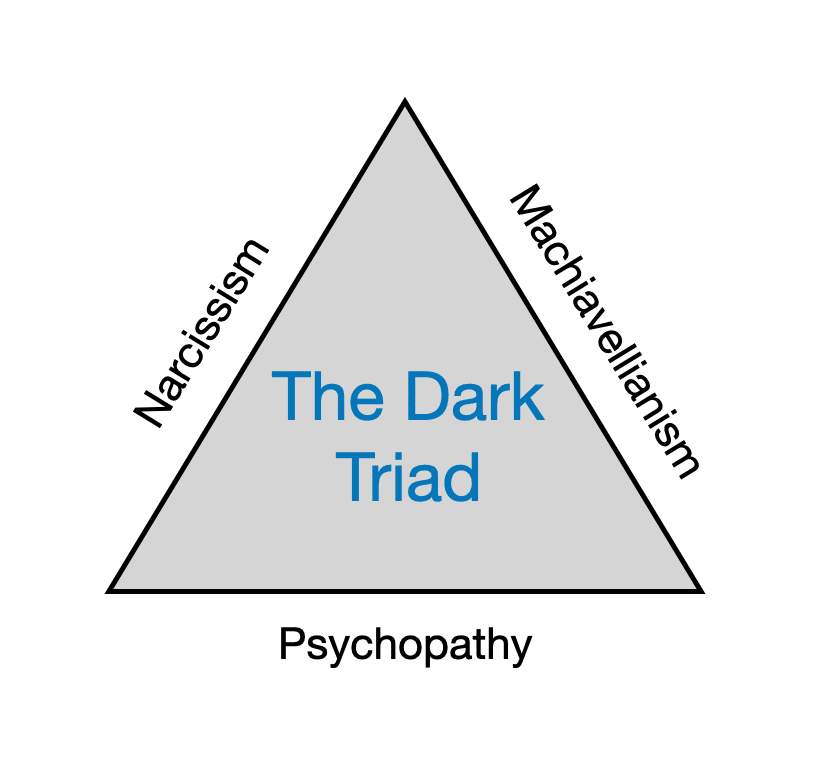
What is The Dark Triad?
Machiavellianism is one of the traits in something called the Dark Triad, which also includes narcissism and psychopathy. These traits and related personality disorders involve harmful behaviours like manipulation, self-centeredness, and not caring about what’s right or wrong. Each trait has its characteristics, but they often work together to strengthen the bad parts of human nature and affect how people act in different situations. Knowing about these traits can help us see how they can affect individuals and society and figure out how to deal with them.
 Measuring Machiavellianism
Psychologists have devised a way to measure how likely someone might behave in devious or manipulative ways. They employ a set of questions and scenarios to gauge individuals’ attitudes towards actions like deceiving others, making ethical choices, and interacting with others. This helps them understand the probability of someone acting in a devious or manipulative manner.
Navigating the Machiavellian Maze
In today’s world, where power plays a big role in shaping different situations, Machiavellianism continues to have a strong influence. Understanding Machiavellianism helps us gain valuable insights into human behavior and the complexities of modern relationships. Being aware of Machiavellian tendencies can help people understand others’ motives, handle social situations better, and find a balance between ambition and ethics as they progress in life.
Machiavellianism and Mental Health
Contrary to the image of the cold, successful manipulator, research shows high-Mach individuals are at greater risk of mental health difficulties, including:
- Anxiety and depression: The constant vigilance required to maintain control and anticipate others moves is mentally exhausting.
- Relationship isolation: Instrumental views of others lead to shallow connections and eventual loneliness.
- Stress and burnout: The effort of sustained manipulation and strategic scheming carries significant psychological cost.
Machiavellianism is a subclinical trait, not a diagnosable disorder. However, it can coexist with anxiety and depression, and therapeutic support can benefit both the individual and those affected by their behaviour.
Can it be treated? Cognitive Behavioural Therapy (CBT) can help individuals develop empathy, reduce manipulative patterns, and build more authentic relationships. There is no specific treatment for Machiavellianism itself, but CBT addresses many of the underlying patterns.
How to Deal With a Machiavellian Person
If you recognise Machiavellian behaviour in someone close to you – a partner, colleague, or family member – there are evidence-based strategies to protect yourself:
- Set and enforce clear boundaries. High-Mach individuals test and exploit fuzzy limits. Be specific about what is and is not acceptable.
- Do not reveal vulnerabilities. Machiavellians identify and exploit weaknesses. Keep personal struggles private until trust is firmly established.
- Document interactions. In workplace settings, keep a record of agreements and communications to prevent gaslighting.
- Seek independent support. Talking therapy can help you process the impact of manipulative relationships and rebuild self-trust.
- Trust your instincts. If something consistently feels off, it probably is. Machiavellians are skilled at making their targets doubt their own perceptions.
Seeking Support
If the information in this article has affected you and you’re going through a tough time or just need someone to talk to, please reach out to our team. We’re here to help and support you during difficult times or suffering with any psychological issues. Feel free to find and book a therapist or get in touch with us for guidance and assistance.